


Description
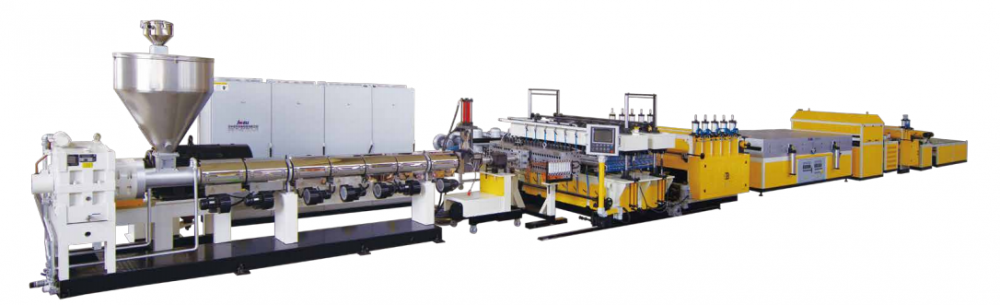
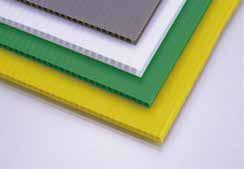
A PP Hollow Plate Extrusion Line is an industrial production system that is used for the continuous manufacture of PP (polypropylene) hollow sheets. These sheets are also known as PP twin-wall sheets or corrugated plastic sheets. The line melts and extrudes polypropylene resin, forming it into a hollow, multi-layered structure before cooling, sizing, cutting and stacking the finished sheets.
These lightweight sheets offer a combination of low density, good impact and moisture resistance, and structural rigidity, making them ideal for use in packaging, advertising boards, construction protection, logistics, and reusable industrial applications.
PP Hollow Plate Application
The PP hollow cross section plate made by PP Hollow plate extrusion line is light and high strength, moisture proof good environmental protection and refabrication performance. The PP hollow plate can be processed into the reusable container, packing case, clapboard, backing plate, and cutlet.


Main technical parameter
| Model | Products width(mm) | Products thickness(mm) | Designed capacity(kg/h) |
| JWS120 | 1200-2100 | 2-8 | 350 |
| JWS150 | 1200-2600 | 2-8 | 500 |
| JWS100+JWS65 | 915 | 12-16 | 400 |
| JWS150+JWS90 | 2000 | 12-16 | 600 |


PP Hollow Plate Extrusion Line Process
The typical PP hollow plate extrusion process includes the following stages:
PP Raw Material Feeding → Extrusion & Melting → Sheet Forming → Vacuum Calibration → Cooling → Haul-Off → Cutting → Stacking
- Raw Material Feeding
PP pellets and, when required, additives, colorants, or recycled materials are fed into the extrusion system through an automatic feeding unit. Material preparation needs to maintain a stable feed rate to ensure consistent sheet thickness and density.
- Extrusion and Melting
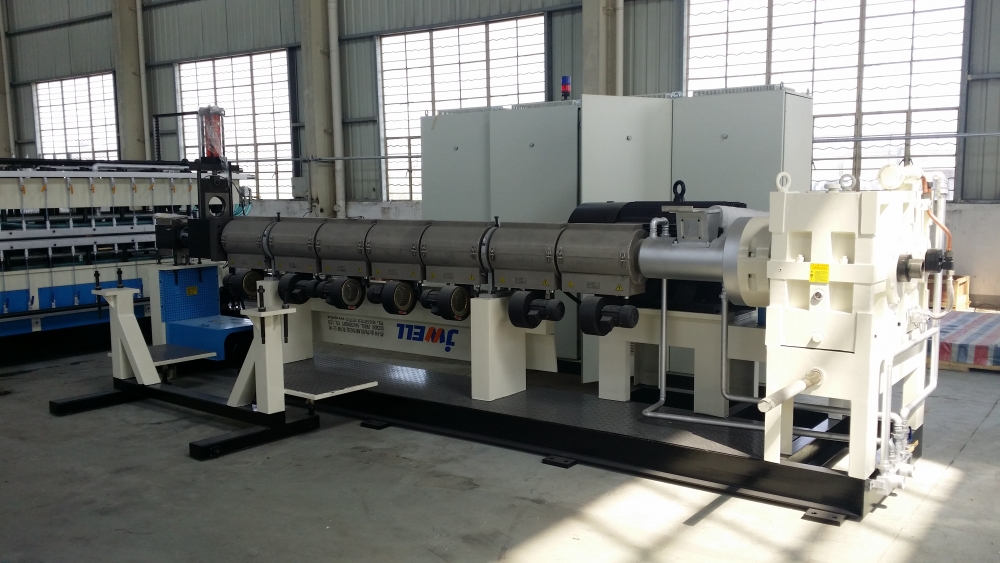
The PP material enters the extruder, where controlled heating and screw shearing gradually melt and homogenize the polymer. The extrusion system establishes the required melt pressure and output for continuous production.
- Hollow Sheet Forming
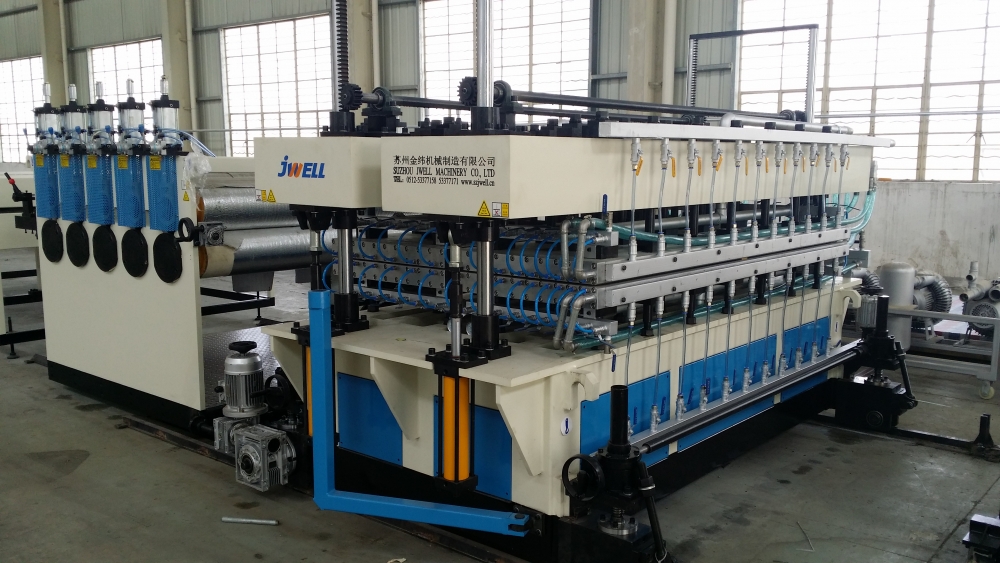
The molten PP is delivered through a specially designed die to form the characteristic hollow internal structure. Depending on the die and forming system, manufacturers can produce different sheet thicknesses, rib configurations, and surface structures.
- Vacuum Calibration and Cooling
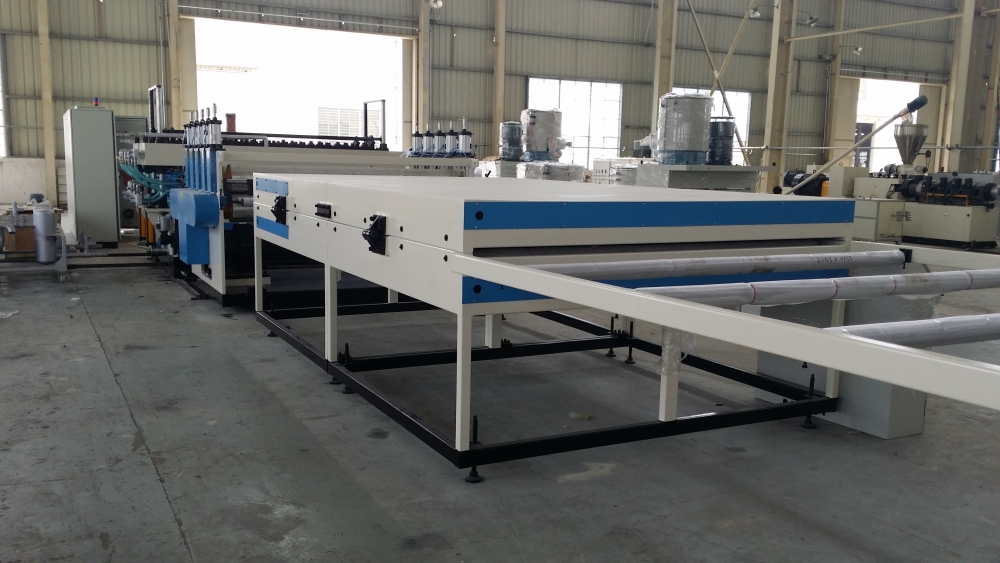
After leaving the die, the hot sheet passes through a calibration system that controls its dimensions and surface flatness. Cooling stabilizes the PP structure and prevents excessive deformation during subsequent processing.
- Haul-Off
A haul-off unit continuously pulls the sheet through the line at a controlled speed. Synchronization between extrusion output and haul-off speed is important for maintaining uniform thickness and dimensional accuracy.
- Cutting and Stacking
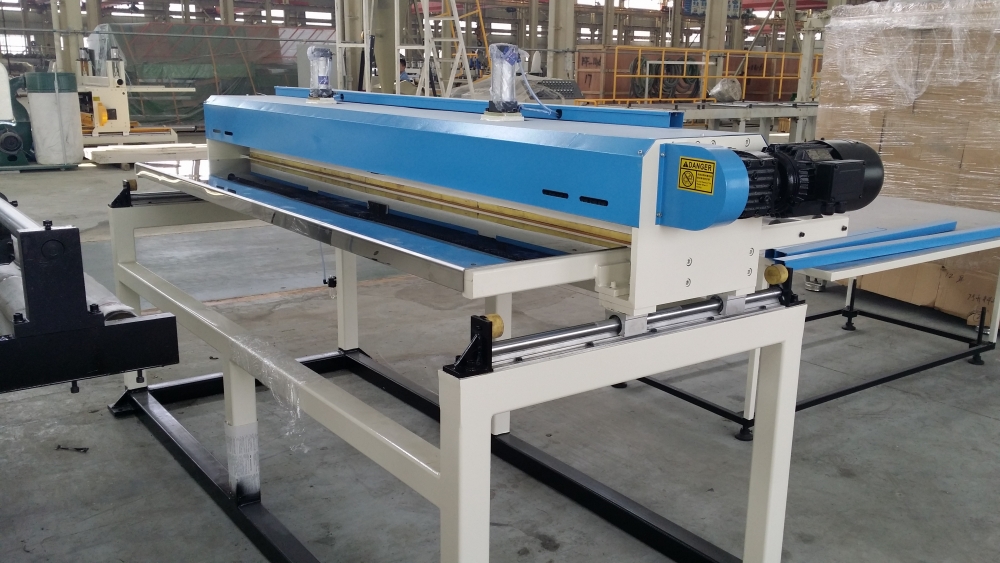
The continuous hollow sheet is cut into specified lengths by an automatic cutting system and then stacked for packaging, storage, or further processing.
Key Factors Affecting PP Hollow Plate Quality
Production performance depends on several factors, including:
- Extruder screw design
- Melt temperature and pressure
- Die design
- Sheet thickness
- Hollow rib geometry
- Cooling efficiency
- Haul-off speed
- Raw material formulation
- Calibration accuracy
A properly configured line can produce PP hollow sheets with consistent thickness, uniform internal structure, good flatness, and stable mechanical performance.


Reviews
There are no reviews yet.